my approach
Therapeutic Yin and Restorative Yoga
Therapeutic Yin Yoga supports those working through the aftermath of injury and trauma, and those coping with pain or nerve injury, to release tension and cultivate restful states. Through targeting the connective tissue of the body— the fascia, ligaments, and tendons— chronic patterns of tension can begin to release, and over time the fascia and joints begin to function more optimally.
Drawing upon over 20 years of yoga practice, 15 years of specialization is psychotherapy for complex trauma, and professional training as a yoga teacher specializing in Yin and Restorative, Mikella offers individualized sessions that expertly target the physical and energetic aspects of tension and pain.
Restorative Yoga can round out the physical and emotional benefits by extending the time spent in restful states to support cellular repair. Meditation and Yoga Nidra can also be incorporated to further support healing, as well as pranayama and guided relaxation. In cases where mobility, flexibility, range of motion, and pain management improve, it is also possible to progress towards gentle flow practices that then allow for lengthening of the muscles and further meditative benefits.
Sessions are offered online over Zoom, and in-person in Philadelphia, PA (coming soon!). In-home sessions in NYC are sometimes offered on a case by case basis.
Therapeutic Yin Yoga is offered on a sliding scale basis. A 90 minute initial consultation and assessment is required for all new clients, to allow adequate time to understands needs and background, along with time for a guided practice. Once the initial session is complete, clients may choose a sliding scale option between $75-150 for future sessions (75 minutes). If the initial session fee of $180 is out of reach for you, please email me to inquire about other options.
Please note that like any physical practice, Yin Yoga is best suited for those who are past the acute stage of an injury, please be sure to check with your doctor about whether you are cleared to work with an injured area.
Why Yoga?
Understanding the relationship between physical and emotional tension
When we experience trauma or injury, it affects all layers of the mind-body system.
Emotional or psychological trauma, even when it does not directly involve the physical body, creates a cascade of effects on the nervous system which begin to impart the physical body including stiffening of muscles and joints (especially in the back, neck, and shoulders) and over time this create chronic patterns of physical tension. The body requires direct interventions that target the related systems in order for release to occur. These systems operate in tandem with the subtle body and emotional body, and require support for lasting and sustainable relief.
For those experiencing chronic pain or recovering from traumatic injury, what begins as a physical ailment may develop into emotional pain, as one encounters changes to experience of sensation, mobility, nerve function, lifestyle, relationships, and vocation. The physical body requires tending to allow for long term recovery and adaptation, but the mind and subtle body also need support in adjusting to new ways of living.
Yoga works equally on the physical, emotional, mental, and spiritual levels.
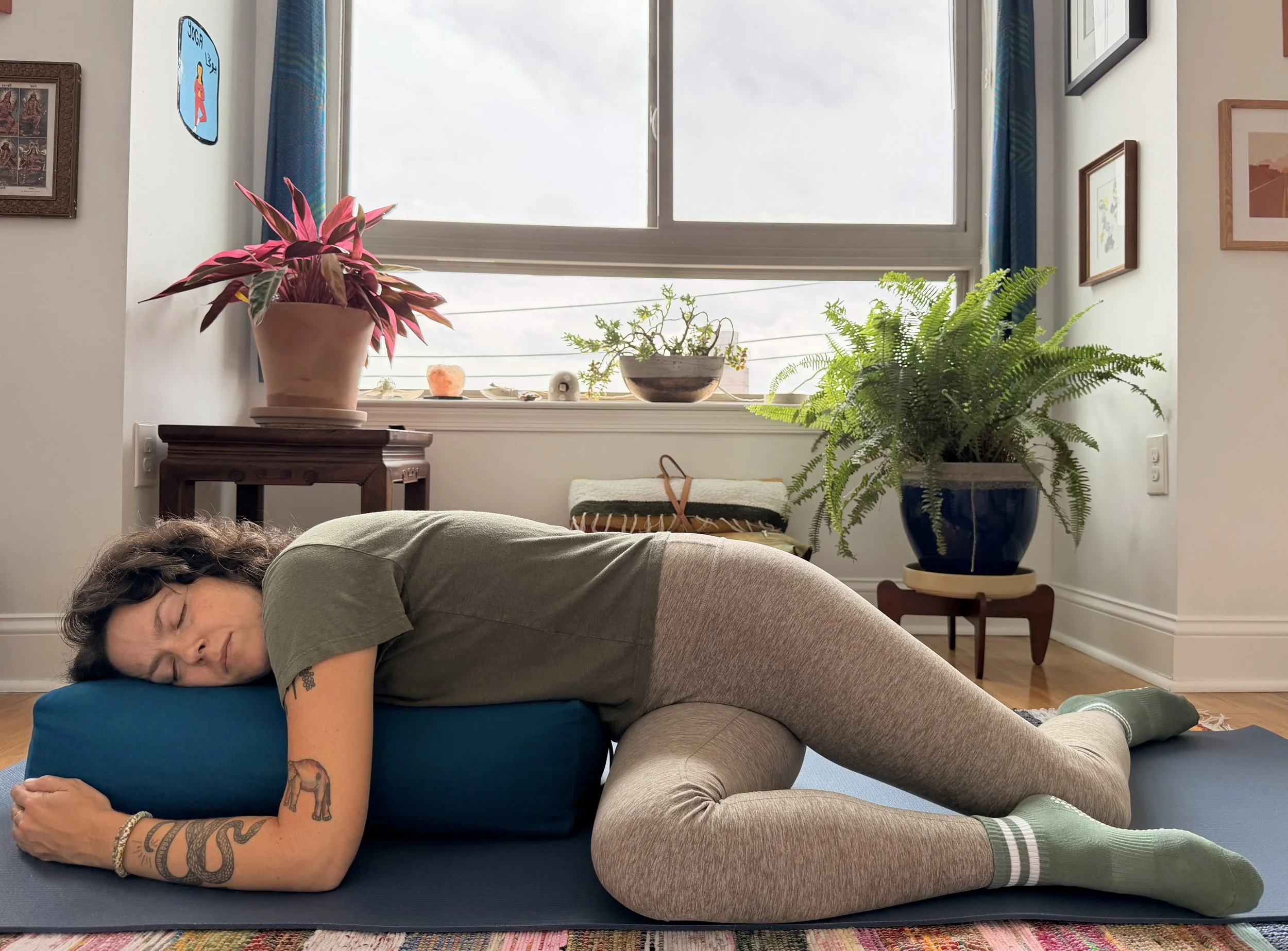
Why Yin?
Yin yoga is a modern form of yoga that incorporates Taoist and Traditional Chinese Medicine approaches with yoga poses and philosophy, to work with the connective tissue of the body, the fascia, to release chronic patterns of physical and emotional tension.
The fascia is a web of fibers underneath the skin that holds muscles, bones, organs, and joints in place while also allowing for smooth gliding of muscles, tendons, ligaments. The experience of aging, repetitive movements, traumatic injury, and chronic stress affects the ability for the fascia to have enough stretch to allow us to have optimal mobility and ease of moving in our individual bodies. Through long-held physical poses used in Yin Yoga, the fascia is able to become lubricated and more elastic. This also makes Yin yoga really well-suited anyone over the age of 40, to support overall joint health as a complement to more active styles of yoga which work primarily with the muscles.
But the fascia is perhaps even more fascinating as vital part of the energy body. In Yoga Philosophy the fascia constitutes its own layer of the subtle body, allowing for information and Prana to move from one part of the body to another, much like a neural network. It holds in the Prana of the body, and also can contribute to the natural release of emotions as well as prevent the natural release of emotion.
In the meridian system of TCM, applying tension to the fascia stimulates energy channels which relate to specific emotional states and bring them to the surface. As a result, along with helping to relieve chronic patterns of physical tension, regular practice of Yin Yoga also supports the release of emotional tension even when there no conscious understanding of its content or meaning.
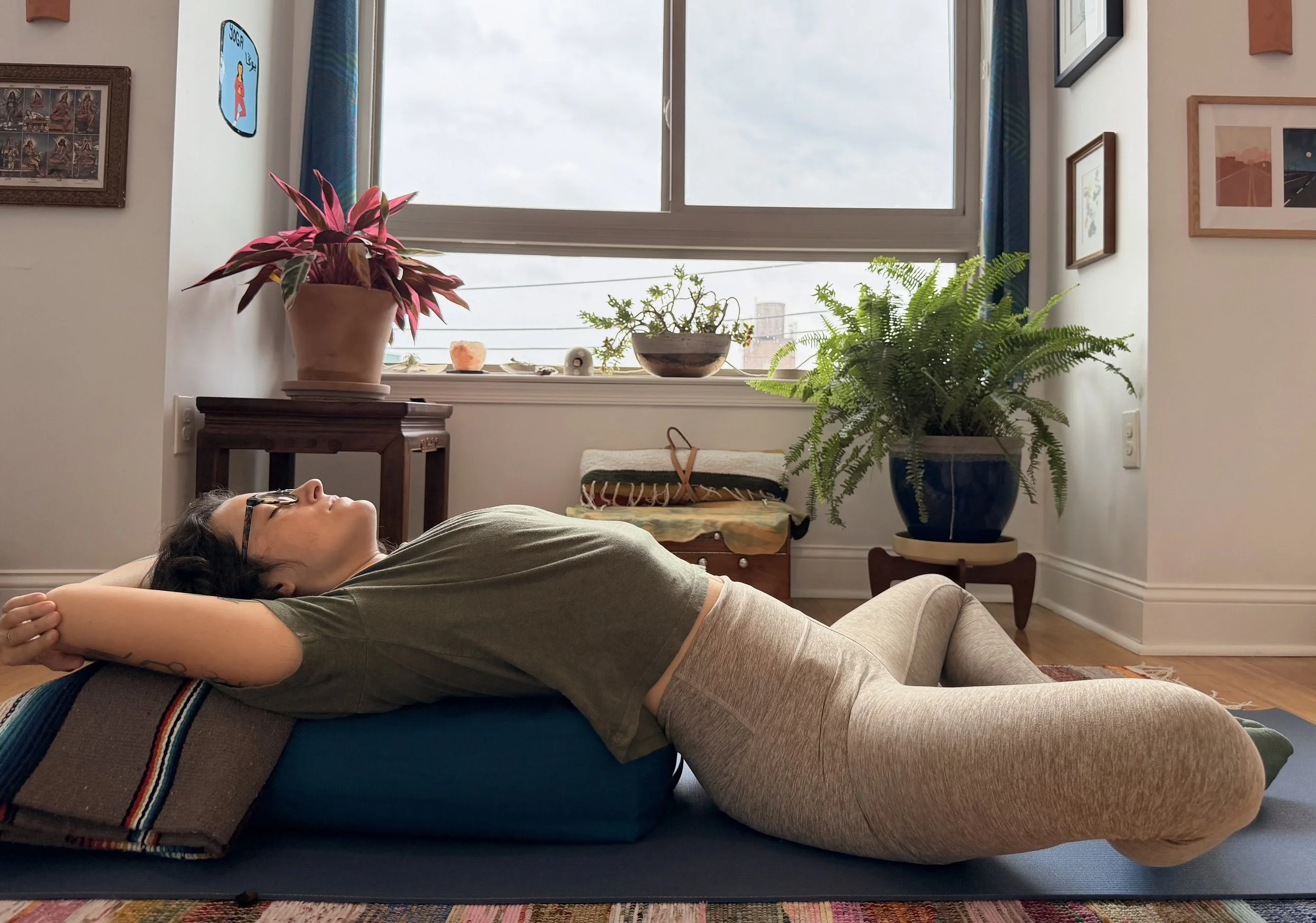
When the fascia begins to release tension through long held poses, the parasympathetic nervous system becomes engaged and we can experience deeper states of relaxation. Combined with mindful breathing and a compassionate guide, this can create ideal conditions to unwind patterns of tension over time.
Depending on the physical needs of the individual, sessions can also incorporate gentle flow for muscular strength and flexibility, and restorative yoga for deeper relaxation and rest. Yin Yoga can be a key component to recovery, and when combined with appropriate engagement of the muscles in other yoga practices, overall health can improve as well.
Group classes
Yin Yoga doesn’t need to be personalized to be beneficial! Classes use the same poses, structured in a sequence that address common patterns of tension, offering modifications and prop suggestions to allow each participant to adjust the practice to meet the needs of their individual body. This can be a great introduction to the practice, financially affordable, and a way to continue after engaging with individual sessions. I welcome you to look for a Yin class at your favorite local yoga studio, or check my upcoming groups and trainings if you’d like to work with me.